
Foreign Affairs: What Do We Know?
The news about Ukraine is the most recent example of the American public's ignorance of the rest of the world

Throughout our history, because our eastern and western borders are great oceans, the US felt it possessed a comfortable separation from the rest of the world. By the late 19th Century, this attitude had been subsumed as developments in transportation and communication emerged. As a growing industrial power, the nation joined the Europeans in colonizing forays (e.g. taking Cuba and the Phillippines). The 20th Century’s two World Wars confirmed our young nation’s position as a global power. While we have some awareness of our southern and northern neighbors, especially when the news is about Mexican immigrants or Canadian truck convoys, the general attitude of Americans is to view the rest of the world through a lens that sees it as only a collection of friends or enemies in distant places. It is safe to say, for example, that most Americans are ignorant of the complicated history of Europe since the collapse of the Roman Empire or the emergence of the modern Middle East after World War I.
To make this point, how many of these European countries can you name?
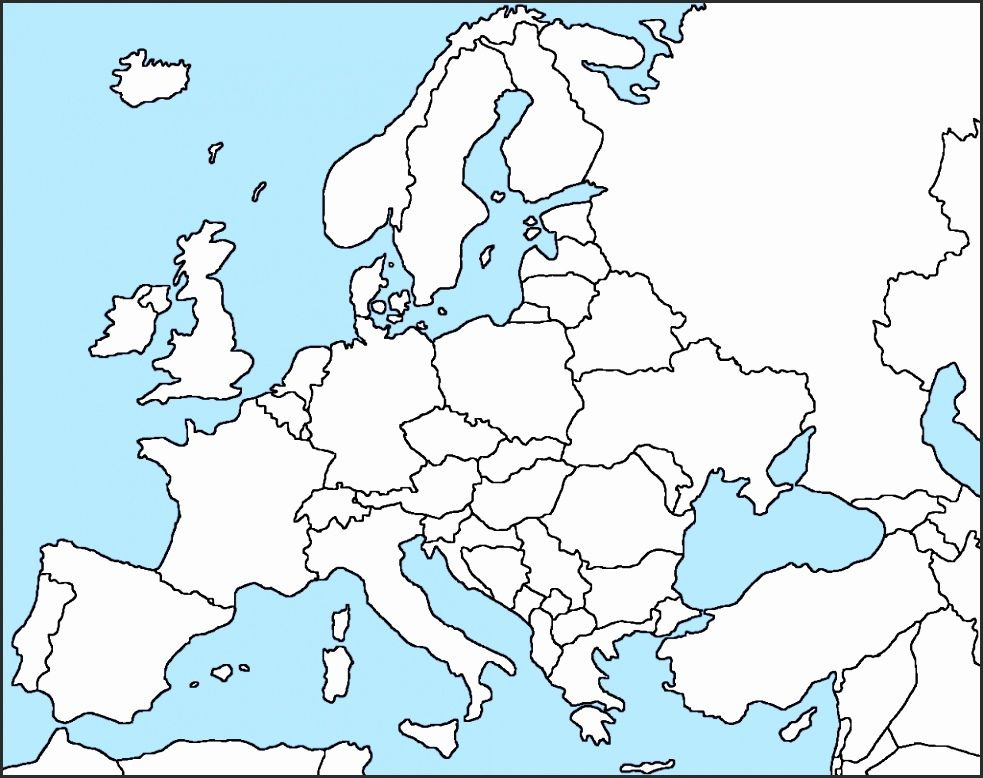
Follow-up trick questions: Where is Yugoslavia? What is the name of Hungary’s only ocean port city? And since it is in the news, can you at least identify Ukraine?
Ukraine is the topic de jour in our fraught relationship with Russia. Is it a question of Russia, the bad guys, wanting to invade and annex a neighbor as they did in 2014 with the Ukrainian region of Crimea? Or is it a matter of the US and its NATO allies, the good guys defending the principle that every nation has the right to self-determination, the right to choose its own form of government, warning Vladimir Putin to keep out of Ukraine? Or is it a more complex issue that cannot be explained neatly in black and white terms? Russian security concerns about its borders with Europe are not recent phenomena and have been an obsession of Russia since the advent of the Soviet Union.
In op-ed in Wednesday’s Washington Post, Edward Hunter Christie, a senior research fellow at the Finnish Institute of International Affairs, points out that:
Over the past two decades, Russia has used everything from the threat of military action to interventions in the realms of economics, politics and critical infrastructure in its campaign against Ukrainian statehood. The aggression is permanent. The notion that Russia might unconditionally return the territories it currently occupies is fanciful.
Bad Vlad’s intentions remain murky. It seems clear that Russia wants to prevent any further actions by the former Soviet republic to align itself with the West. Specifically, Russia is opposed to Ukraine joining NATO, the US-European alliance created in 1949 as a bulwark against potential Soviet aggression. While the Russians have amassed troops on the border with Ukraine, it is probable a large-scale military action would prove costly since the Russians risk getting mired in a war against the large, Western-trained Ukrainian military. In his weekly newsletter, Noah Smith makes the point that Ukrainians are exhibiting unity “in the face of massive Russian intimidation”. In doing so, Smith asserts that “Ukraine clearly won the moral battle in Europe“ with the result that “Europe is now more likely… to support [Ukraine] economically and diplomatically”. Perhaps Putin’s goal in the Russian troop build-up on the border was to weaken Ukraine by the threat alone. A destabilized Ukraine, with a weak economy, a history of corruption, and political power in the hands of a few oligarchs would not be attractive to western investment and could not expect continued military support. It could more easily fall under Russian influence.
Short of military conflict, asymmetrical warfare is probably already underway: Disinformation campaigns, hacking attacks on government websites, and critical infrastructure. As Christie, the researcher makes clear, this situation is permanent.
What does this mean for the US?
While engaging with the Russians diplomatically on one hand and threatening severe economic sanctions if they invade Ukraine on the other, the Biden Administration has taken a leadership role in the efforts to defuse the crisis. While it is much too soon to assess the effectiveness of this approach, the US has been successful in urging its NATO allies to join in presenting a united front. If the goal is to avoid war, diplomacy must be able to resolve differences. We have been clear that Ukraine, like all nations, has a right to self-determination of its government, and that borders between nations cannot be changed by force. To assuage Putin, it is also clear that currently there is no path forward for Ukraine to become part of NATO. Whether this is a solid enough basis for a diplomatic settlement remains to be seen. As is often said, the situation remains fluid.
All of these developments are a test for any American President. The last one, lacking any understanding of how the world worked, diminished America’s leadership (a word he probably cannot spell) and abandoned the world order we had been instrumental in creating 75 years ago. Biden must not only rebuild our standing in the world but must do so in the face of a global pandemic and a newly-formed axis of the authoritarian governments of Russia and China.
All this at the same time he must govern a divided nation effectively. None of this is simple.
168 newsletters are emailed on an unscheduled basis. Newsletters are also posted to www.1hundredsixty8.substack.com. Visit the site to view archived newsletters.
If you would like to support my efforts here, please consider becoming a paying subscriber for $5.00 per month.
If you don’t wish to become a regular subscriber, please consider making a contribution from time to time by leaving a tip. Click below:
Aside from your comments- which are encouraged- if you would like to submit a piece of your own for 168, please email me at nicrosato2@gmail.com.